Module 2: Design Rules for Printability
| Site: | OpenMoodle der Universität Bielefeld |
| Course: | BITS SPACE – 3D Printing & Modelling |
| Book: | Module 2: Design Rules for Printability |
| Printed by: | Gast |
| Date: | Friday, 20 November 2026, 10:05 PM |
1. Minimum Wall Thickness
A common reason that prints fail is the presence of extremely thin walls or fragile details.
For functional parts, a minimum wall thickness of 1.2 mm to 2.0 mm is recommended to ensure structural integrity.
Objects with walls thinner than 1.0 mm are often too fragile to survive the removal of support material or standard handling.
In Tinkercad, the Ruler tool should be utilized to verify these dimensions before exporting the file.
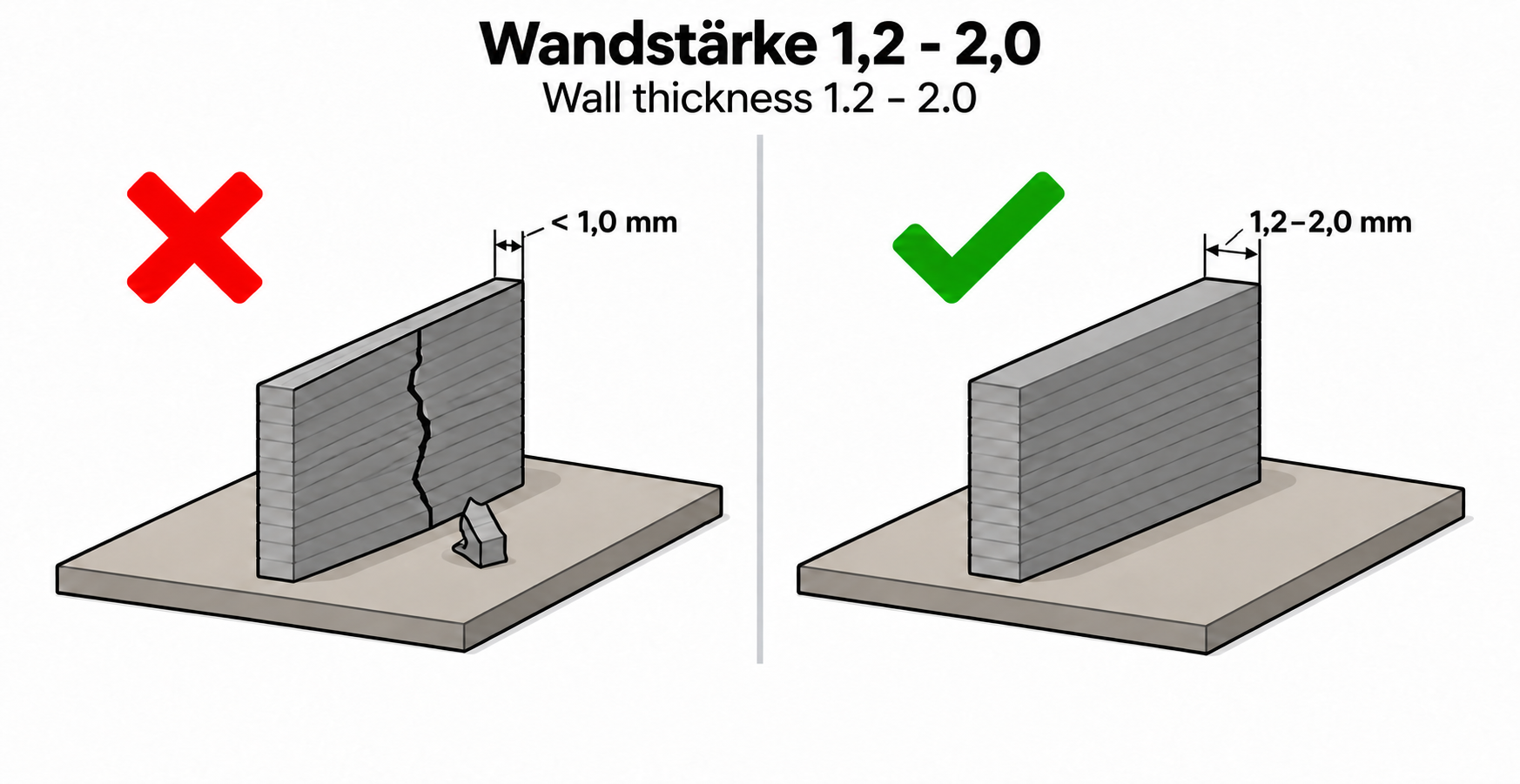
AI-generated illustration.
2. The 45° Overhang Rule
3D printers build objects layer by layer, meaning each new layer requires the support of the layer beneath it.
Angles up to 45° from the vertical axis can generally be printed without additional support.
Angles steeper than the 45° are considered “overhangs” and typically require the generation of temporary support structures in the slicer software.
Designing with the 45° rule in mind reduces material waste and improves the surface finish of the final part.
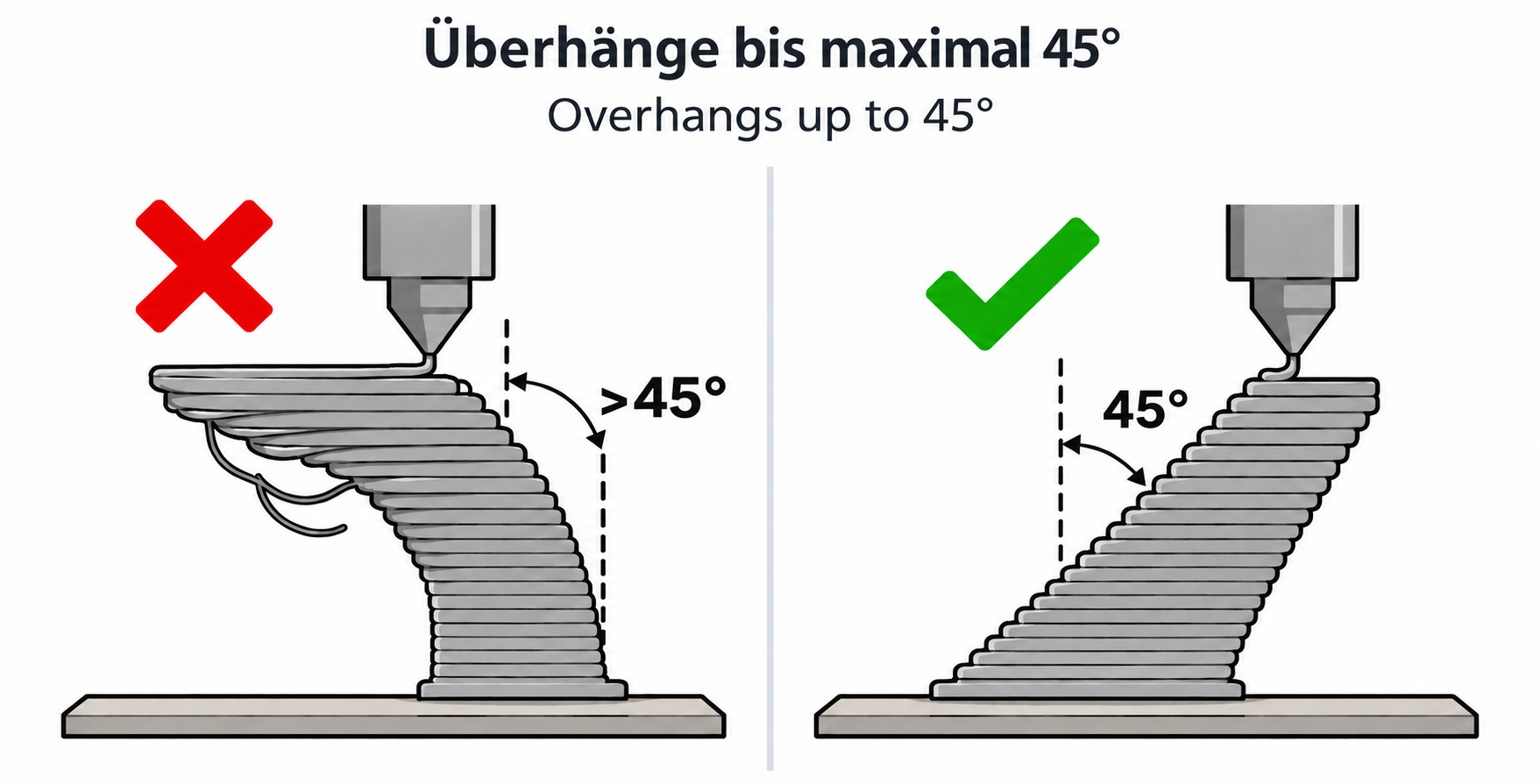
AI-generated illustration.
3. Bridging Limits
“Bridging” occurs when the printer is required to extrude plastic between two raised points without support underneath.
While short bridges can be successfully printed, long horizontal spans may sag or fail.
It is recommended that long spans are avoided or designed with an arch or a central support column to maintain the shape.
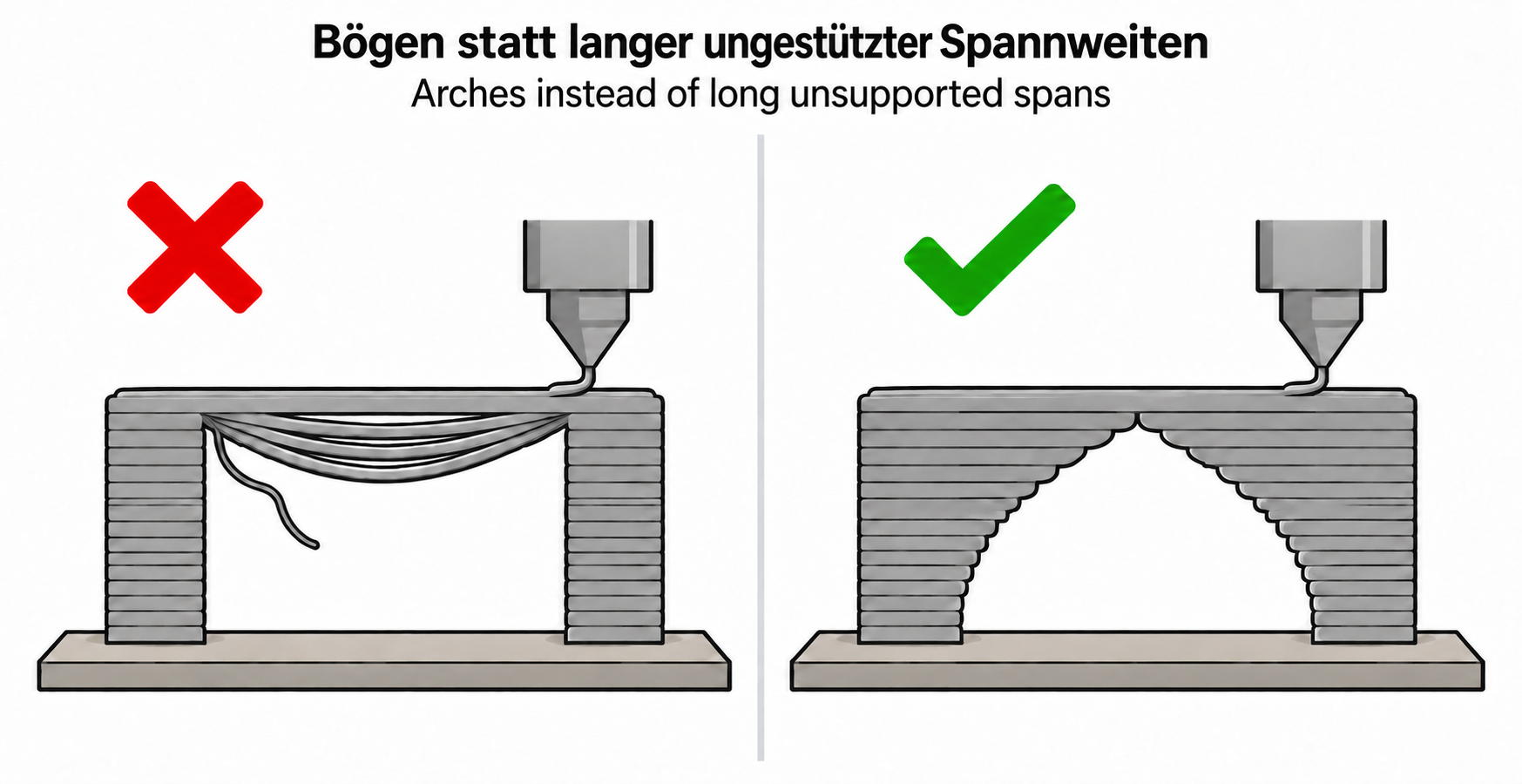
AI-generated illustration.
4. Bed Adhesion and Orientation
The stability of a print depends on its “footprint” on the build plate.
Models should be designed with at least one flat surface to ensure proper adhesion to the printer bed.
If a model is problematic due to its geometry, it may need to be scaled, split into multiple parts, or re-oriented to improve feasibility.
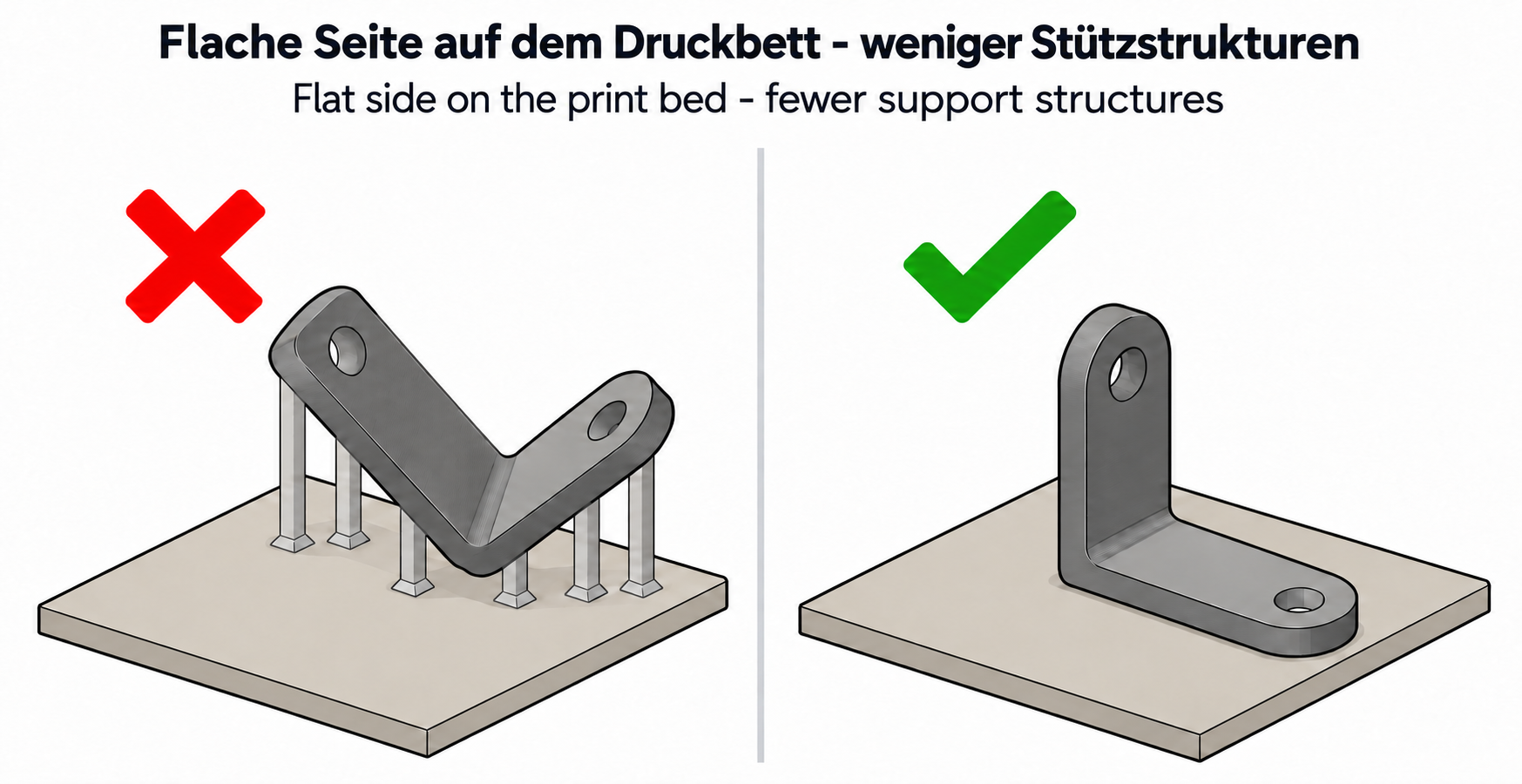
AI-generated illustration.
5. Volume and Filament Constraints
Physical limits are determined by both machine capacity and the policy.
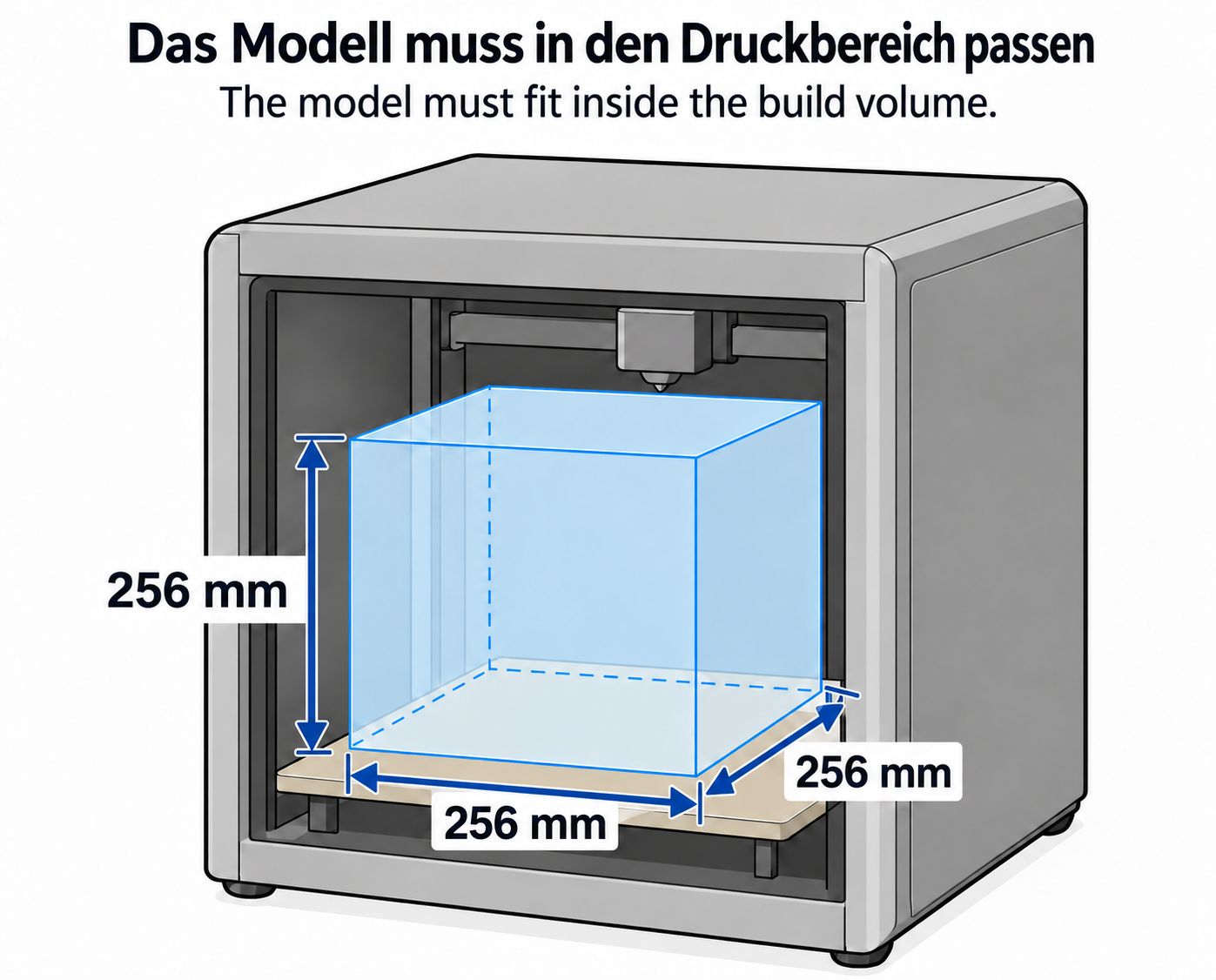
Printer Volume: The design must fit within the maximum dimensions of the printer capacity (256 mm x 256 mm x 256 mm).
Material Limit: According to our policy, if an estimate exceeds 600 g of filament, you are welcome to use the printers but you are responsible for purchasing the material.
AI-generated illustration.