Interdisziplinäres Selbstlern-Projekt: BITS in Motion – From Digital Illusion to Physical Reality - Perceptual Shift (Englisch)
In this interdisciplinary mini-project, you will explore the intersection of 3D design, visual illusion, augmented reality, and animation by creating a perceptual-shift sculpture inspired by Michael Murphy’s Perceptual Shift.
2. How it works
Why Your Eyes Are About to Play Tricks on You
Ever looked at a pile of random junk and suddenly BOOM it snaps into a perfect portrait? That mind-bend is the heart of perceptual-shift art.
Below, you’ll see the stop-motion video of the designed BITS logo. You can also explore the AR 3D model example — just scan the AR QR!

How the Magic Works
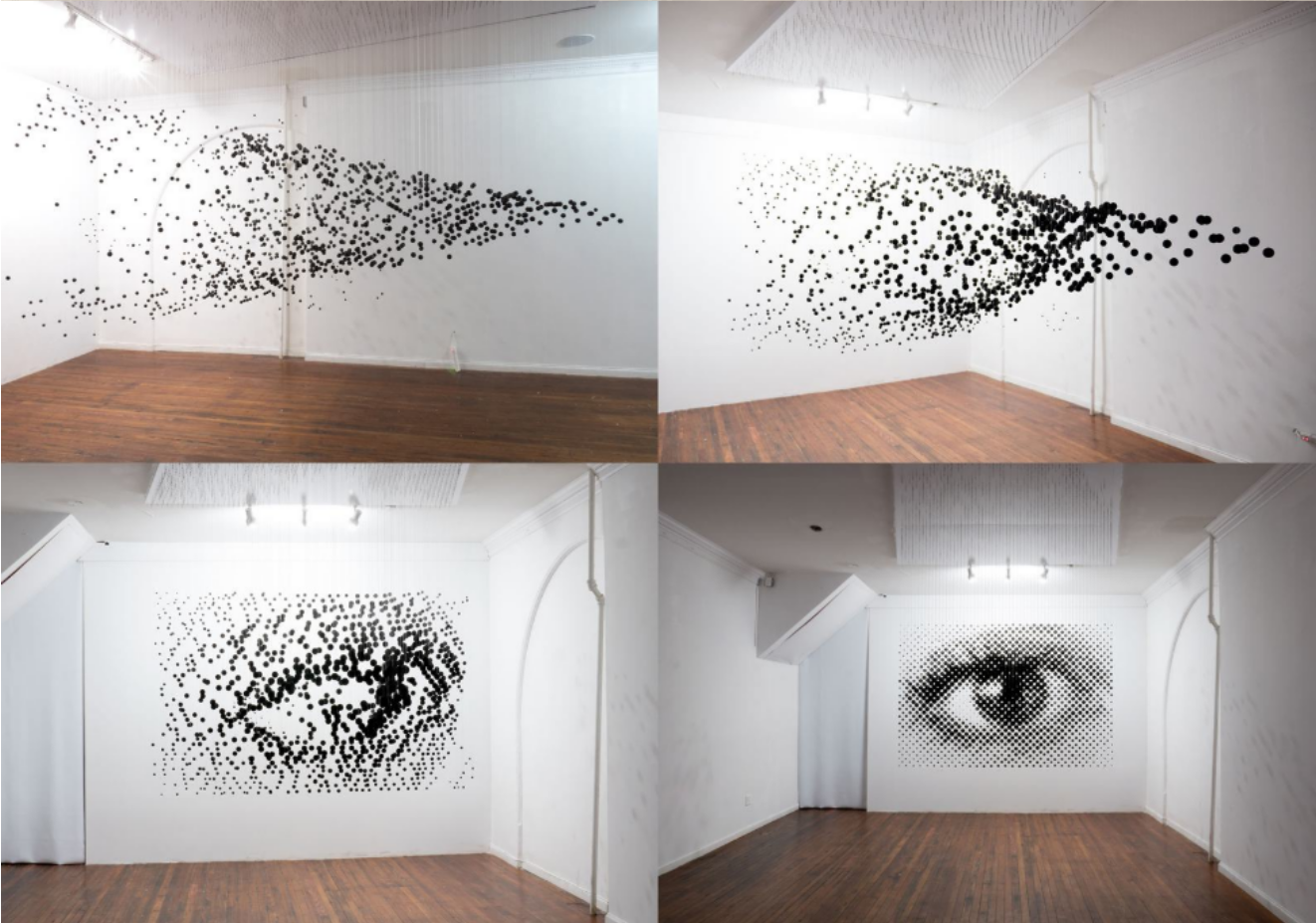
From most angles: total chaos — floating shapes, household trinkets, blobs of color.
From one specific angle: Click! Everything lines up into a crystal-clear image — a face, a logo, you name it.
Artists use our brain’s love of patterns against us. They scatter parts in 3D space but define a secret vantage point where the puzzle suddenly resolves.
Two Masters of the Illusion
Bernard Pras
Builds portraits out of everyday objects like brooms, bottles or panels. What looks like a messy garage transforms into Albert Einstein when viewed from the right position.
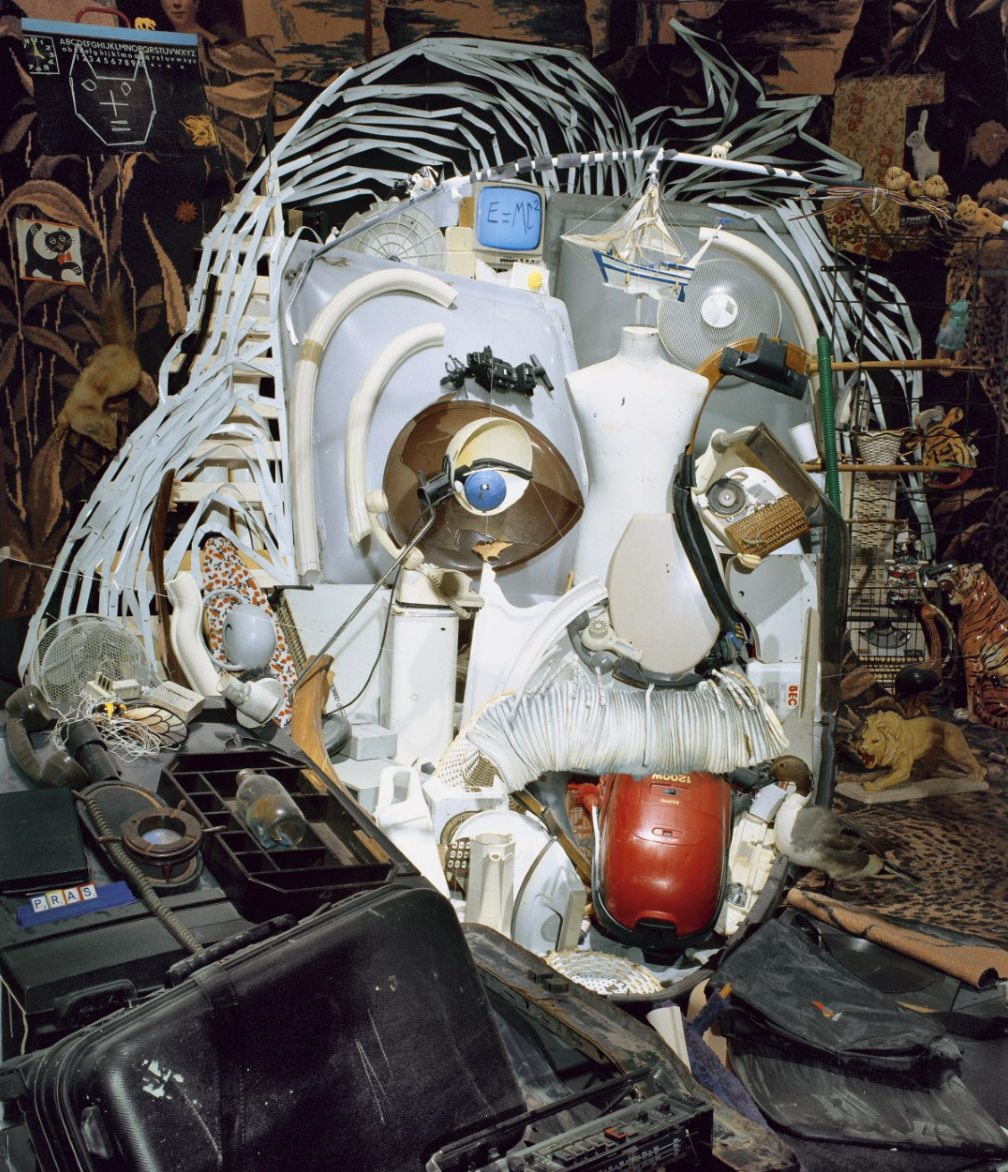
Michael Murphy
Suspends hundreds — sometimes over 1,200 — painted wooden spheres or panels. His piece Perceptual Shift looks like confetti frozen mid-explosion until you stand at the marked spot. Suddenly, a flawless eye appears in mid-air.
Why We Love It
Interactive: The artwork changes as you move.
Mind-bending: It reminds us that perspective shapes reality.
DIY-friendly: With tools like 3D printing (hello, BITS logo!), anyone can experiment with spatial illusion.
Next time you see a “random mess” in a gallery (or our vitrine), look for the perfect viewing spot. Your brain will have an aha! moment.