Module 1: Introduction to 3D Printing
4. Common Materials
Various filaments are used depending on the mechanical requirements of the project.
PLA (Polylactic Acid): A biodegradable plastic that is the standard for beginners due to its ease of use and low warping.
PETG: A more durable and heat-resistant material often used for functional lab components or mechanical parts.
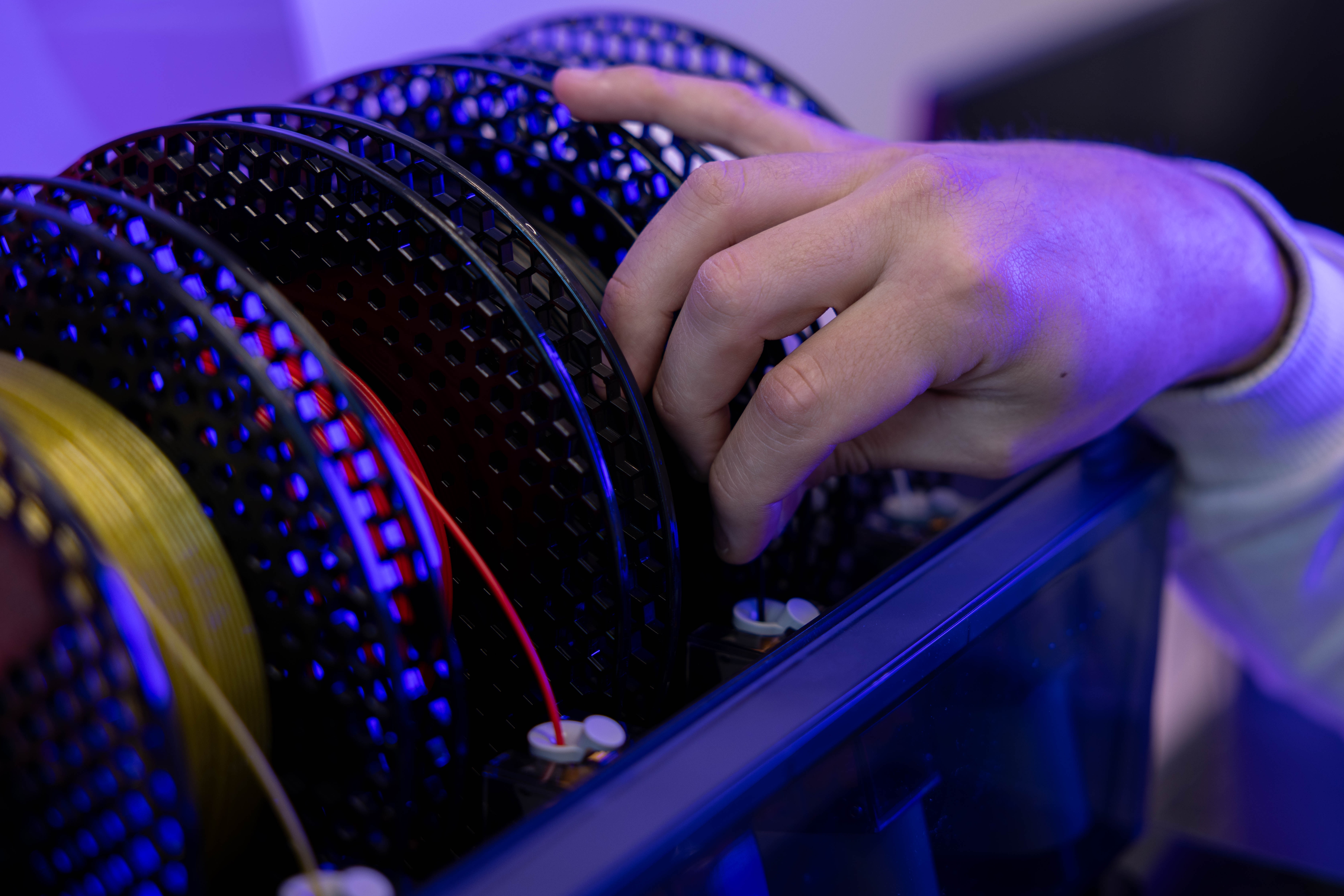
Material Selection Tip: When choosing a material, consider not only the strength but also the print difficulty. Materials like PAHT-CF or PC Blend often require specific settings or an enclosed build chamber, while PLA and PETG are very beginner-friendly and easy to use.
The following table introduces common filaments and explains their specific characteristics and typical applications. ⬇️
|
Filament |
Strength |
Flexibility |
Heat Resistance |
Print Difficulty |
Typical Applications |
|
|
PLA |
Medium |
Low |
Low (~60°C) |
Very Easy |
Prototypes, models, decorative prints, education |
|
|
PLA-CF |
High stiffness |
Low |
Low (~60°C) |
Easy–Medium |
Lightweight structural parts, aesthetic prototypes |
|
|
PETG |
Medium–High |
Medium |
Medium (~80°C) |
Easy |
Mechanical parts, containers, functional prototypes |
|
|
ABS-T |
High |
Low |
High (~100°C) |
Medium |
Automotive parts, tool housings, functional components |
|
|
PC Blend |
Very High |
Low |
Very High (~110°C+) |
Hard |
Engineering parts, industrial prototypes |
|
|
PAHT-CF |
Extremely High |
Low |
Very High (~150°C) |
Hard |
Structural components, tooling, automotive parts |
|
|
FilaFlex 40 |
Medium |
Very High |
Medium |
Medium |
Phone cases, soft grips, wearables |
|
|
FiberFlex 40D |
Medium |
High |
Medium |
Medium |
Flexible mechanical parts, vibration dampers |
|
|
PVA |
Low |
Low |
Low |
Medium |
Water-soluble supports for complex prints |
|
|
PVB |
Low–Medium |
Low |
Low |
Easy |
Transparent decorative prints, lamps, visual models |
|